

The Evolution of World of Warcraft: A Timeline Through Expansions
Mar 30, 2026 - 12 mins read
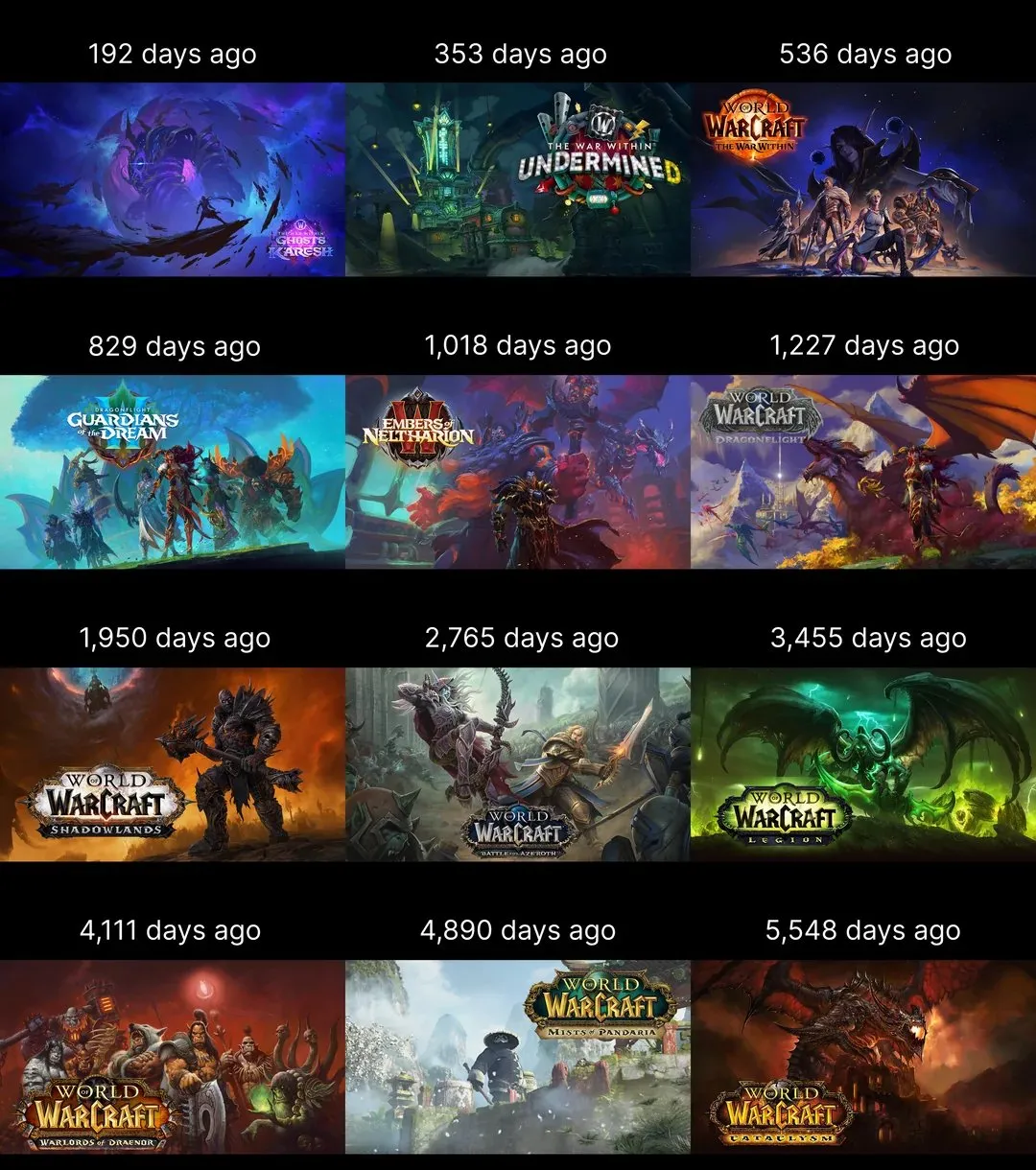
The Evolution of World of Warcraft
Few games in history have managed to stay relevant for over two decades.
World of Warcraft is one of them.
The image above tells a powerful story. Not just of expansions, but of transformation. Each panel represents a phase where the game either reinvented itself, experimented boldly, or corrected its own mistakes.
This is not just a timeline. It is a case study in survival.
The Foundation of Azeroth
Before expansions became a regular cycle, World of Warcraft introduced something revolutionary for its time.
A living, breathing world.
Players were not just completing missions. They were:
- forming guilds
- exploring continents
- participating in large-scale raids
- building social identities
This early foundation is what made WoW more than a game. It became a digital ecosystem.
Mists of Pandaria (4,890 Days Ago)
When this expansion launched, many players were skeptical. The aesthetic felt lighter compared to previous dark themes.
But Pandaria delivered depth where it mattered.
Key Contributions:
- Introduction of the Monk class
- A new continent with rich lore
- Flexible raid systems
Why It Matters:
Pandaria proved that tone does not define quality. Strong mechanics and storytelling can overcome perception.
Warlords of Draenor (4,111 Days Ago)
This expansion had one of the strongest openings in WoW history, but struggled to maintain momentum.
Key Features:
- Garrisons (player-controlled bases)
- Time-travel narrative
- Visual and animation upgrades
The Problem:
Content drought.
While the systems were promising, lack of consistent updates caused player drop-off.
Legion (3,455 Days Ago)
Legion marked a major comeback.
It is often considered one of the best expansions ever released.
What Worked:
- Artifact weapons that evolved with players
- Class-specific campaigns
- Massive endgame content
Why It Succeeded:
Legion focused on player identity. Each class had a unique journey, creating a personal connection to the game.
Battle for Azeroth (2,765 Days Ago)
This expansion returned to the core conflict between Alliance and Horde.
Highlights:
- Warfronts
- Island Expeditions
- Azerite system
Challenges:
The systems introduced complexity without always adding meaningful depth.
Still, it kept the world active and evolving.
Shadowlands (1,950 Days Ago)
Shadowlands took players beyond the physical world into the afterlife.
Key Systems:
- Covenants with unique abilities
- The Maw endgame zone
- Torghast dungeon system
Reception:
Mixed.
While the ideas were ambitious, execution issues created friction for players.
Dragonflight (1,227 Days Ago)
Dragonflight marked a reset in design philosophy.
After years of heavy systems, Blizzard simplified the experience.
Key Improvements:
- Dragon riding mechanics
- Revamped talent trees
- Focus on exploration and freedom
Why It Worked:
Players felt less restricted. The game became more enjoyable without unnecessary complexity.
Guardians of the Dream & Embers of Neltharion (1,018–829 Days Ago)
These updates built on Dragonflight’s success.
What They Added:
- Expanded storylines
- New zones and raids
- Improved endgame systems
Impact:
Blizzard demonstrated consistency. Instead of drastic changes, they focused on refinement.
The War Within (536 Days Ago)
This expansion marks the beginning of a larger narrative arc.
What Makes It Different:
- A multi-expansion storyline approach
- Deeper world-building
- Underground exploration
Why It Matters:
WoW is shifting from isolated expansions to connected storytelling.
Recent Updates and Refinements (353–192 Days Ago)
The latest updates focus on improving player experience.
Focus Areas:
- Quality of life enhancements
- System balancing
- Better pacing of content
Direction:
WoW is becoming more sustainable and accessible.
The Pattern Behind WoW’s Evolution
If you step back and observe the timeline, a clear pattern emerges.
Phase 1: Innovation
New systems and bold ideas are introduced.
Phase 2: Overcomplexity
Too many systems lead to player fatigue.
Phase 3: Simplification
The game returns to core gameplay and fun.
This cycle repeats, but each time with lessons learned.
Why World of Warcraft Still Thrives
Most MMORPGs fade after a few years.
WoW continues.
1. Reinvention
Each expansion attempts something new.
Even failures contribute to future success.
2. Community Strength
Guilds, friendships, and shared experiences keep players invested.
3. Iterative Development
Blizzard continuously adapts, improving systems over time.
Lessons for Game Developers
There are valuable insights here for anyone building games.
1. Evolution is Necessary
A game cannot remain static. Player expectations change constantly.
2. Simplicity Wins
Complex systems do not always improve gameplay.
Clarity and fun matter more.
3. Community is Core
A strong community can sustain a game longer than any feature.
The Future of WoW
World of Warcraft is evolving into something beyond a traditional MMORPG.
What Lies Ahead:
- Connected narrative arcs across expansions
- Faster update cycles
- Better onboarding for new players
- More player-friendly systems
Conclusion
The timeline in the image is not just about content updates.
It represents adaptation.
From Pandaria to The War Within, WoW has continuously changed, failed, improved, and grown.
That is why it still stands strong today.
Final Thought
Games do not survive because they are perfect.
They survive because they evolve.
World of Warcraft is proof of that.
Mon Mar 30 2026

