Summary
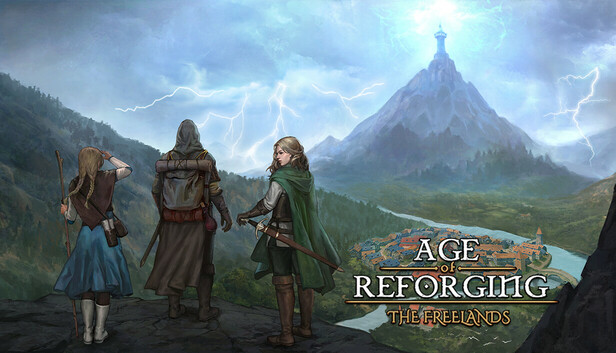
Age of Reforging: Freelands is quietly building a reputation as one of the most intriguing sandbox RPGs in recent years. With its open-ended systems, player-driven progression, and emergent storytelling, it offers a gameplay experience that feels both unpredictable and deeply personal. This article explores what makes its gameplay so compelling.
Table of Contents
- Summary
- A True Sandbox Experience Without Hand-Holding
- Systems-Driven Gameplay That Creates Emergent Stories
- Combat, Survival, and Progression That Feel Earned
- Why the Game Stands Out in a Crowded RPG Space
- Conclusion
- FAQ
A True Sandbox Experience Without Hand-Holding
The first thing you notice about Age of Reforging: Freelands is how little it tells you what to do.
And that is exactly the point.
Freedom Over Direction
Unlike traditional RPGs that guide you through quests and objectives, Freelands throws you into the world with minimal instructions.
There is no:
- Clear main quest
- Linear progression path
- Hand-holding tutorial
Instead, the game asks:
“What do you want to become?”
Player-Defined Roles
You can shape your character into:
- A wandering trader
- A mercenary
- A craftsman
- A rogue survivor
Your path is not pre-written. It is discovered through gameplay.
Exploration as a Core Mechanic
The world encourages exploration through:
- Hidden locations
- Dynamic encounters
- Resource discovery
There is no map filled with icons telling you where to go. You learn the world by moving through it.
Risk and Reward
Because there is no safety net, every decision carries weight.
- Travel too far without preparation, and you might not survive
- Take on a stronger enemy, and you risk losing everything
This creates tension and excitement rarely seen in guided RPGs.
Why This Feels Different
Most games aim to make players comfortable.
Freelands does the opposite.
It creates discomfort, uncertainty, and curiosity.
And that is what makes it engaging.
Systems-Driven Gameplay That Creates Emergent Stories
What truly elevates Age of Reforging: Freelands is its reliance on systems rather than scripted events.
What Are Systems-Driven Games?
Instead of pre-designed storylines, the game uses interconnected systems to generate experiences.
These include:
- Economy
- AI behavior
- Environmental interactions
- Player choices
Emergent Storytelling
Because of these systems, stories emerge naturally.
For example:
- You start as a trader
- Get ambushed by bandits
- Lose your goods
- Decide to hunt them down
This was not a scripted quest.
It was a consequence of gameplay.
Dynamic World Interaction
NPCs are not static.
They:
- Move around
- Trade goods
- React to events
This creates a living world where things happen even without your involvement.
Consequences Matter
Your actions influence the world:
- Killing a faction member may trigger retaliation
- Helping a group can unlock new opportunities
This makes choices meaningful.
Replayability
Because no two playthroughs unfold the same way, the game has:
- High replay value
- Endless possibilities
Each session becomes a unique story.
Combat, Survival, and Progression That Feel Earned
Freelands does not hand out power easily.
Everything must be earned.
Combat That Requires Skill
Combat is not just about stats.
It involves:
- Timing
- Positioning
- Resource management
Enemies are dangerous, and mistakes are punished.
Survival Mechanics
You need to manage:
- Health
- Stamina
- Supplies
Ignoring survival elements can quickly lead to failure.
Equipment and Crafting
Progression is tied to:
- Finding better gear
- Crafting items
- Improving equipment
There is no instant upgrade system.
You build your strength over time.
No Artificial Scaling
Enemies do not scale with your level.
This means:
- Some areas are genuinely dangerous
- Growth feels real and measurable
Progression Through Experience
Instead of leveling up quickly, progression happens through:
- Practice
- Exploration
- Smart decision-making
Why This Feels Rewarding
Because nothing is given freely, every achievement feels:
- Meaningful
- Earned
- Personal
This creates a strong sense of satisfaction.
Why the Game Stands Out in a Crowded RPG Space
The RPG genre is filled with massive titles and big-budget productions.
Yet, Age of Reforging: Freelands manages to stand out.
Focus on Systems Over Spectacle
Many modern RPGs prioritize:
- Graphics
- Cinematics
- Story-driven experiences
Freelands focuses on:
- Gameplay systems
- Player freedom
- Emergent interaction
A Niche That Feels Fresh
While sandbox RPGs exist, few commit fully to:
- Player-driven narratives
- Minimal guidance
- High consequence gameplay
This makes the game feel unique.
Community and Discovery
Because the game does not explain everything, players often:
- Share discoveries
- Exchange strategies
- Learn from each other
This builds a strong community around the game.
A Different Kind of Immersion
Instead of scripted immersion, Freelands offers:
- Systemic immersion
- Personal storytelling
- Organic experiences
Why It Is a Hidden Gem
The game may not have massive marketing, but it delivers something rare:
A world that feels truly alive and reactive
Conclusion
Age of Reforging: Freelands is not a game for everyone.
It does not guide you.
It does not reward you instantly.
It does not simplify complexity.
But for players willing to embrace its systems and freedom, it offers something extraordinary.
A gameplay experience where:
- Every decision matters
- Every story is unique
- Every success feels earned
In a landscape dominated by predictable design, Freelands stands as a reminder of what games can be when they trust the player.
And that is what makes its gameplay truly interesting.
FAQ
1. What type of game is Age of Reforging: Freelands?
It is a sandbox RPG focused on player freedom and systems-driven gameplay.
2. Is the game beginner-friendly?
It has a steep learning curve but rewards patience and exploration.
3. Does it have a main storyline?
Not in a traditional sense. The story emerges from your actions.
4. What makes it different from other RPGs?
Its emphasis on systems, freedom, and emergent storytelling.
5. Is it worth playing?
Yes, especially if you enjoy deep, open-ended RPG experiences.
Wed Apr 22 2026